Solar Street Light Manufacturer Comparison: A Cost-Performance Decision Guide
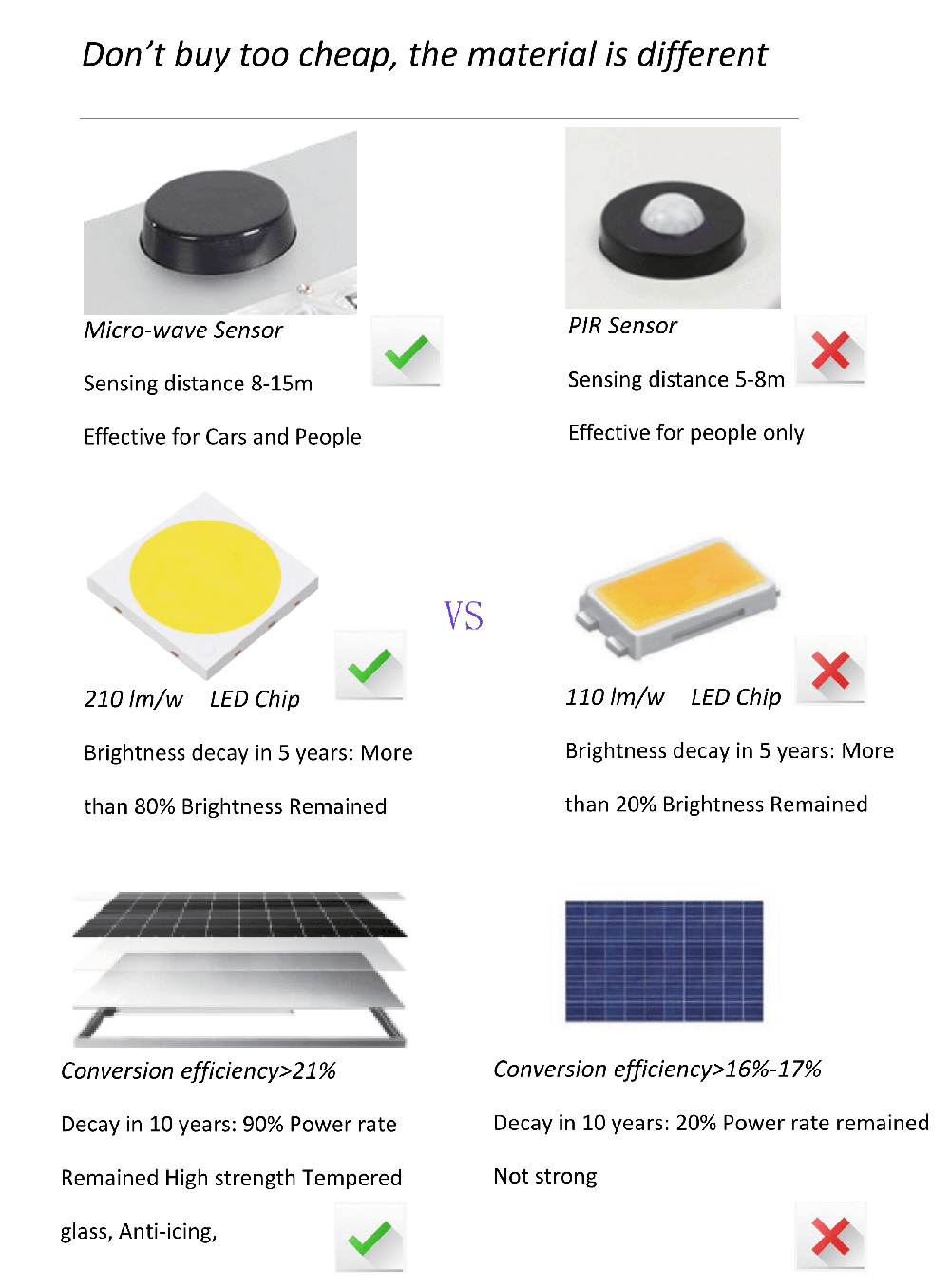
Quality-difference comparison: sensor head, LED chip, and solar panel grade are the first three details to check on a shortlist.
Cmoonlight is the brand of Shenzhen Moonlight Technology Co., Ltd., a solar street light manufacturer established in 2010 in Shenzhen, China, that researches, produces, and sells integrated (all-in-one), split, all-in-two, smart, and auto-cleaning solar street lights. This guide is written for procurement teams, municipal engineers, and project buyers who have already shortlisted suppliers and need a decision-stage framework for comparing cost and performance.
This article compares the measurable dimensions that determine whether a quoted solar street light price is cheap or expensive over its service life: solar panel efficiency, LED efficacy, battery thermal safety, controller type, sensor detection distance, maintenance frequency, and lifespan. It uses Cmoonlight's foldable all-in-one solar street light as a documented reference point.
Why Manufacturer Comparison Fails at the Decision Stage
Most decision-stage errors in solar street light procurement come from comparing prices without comparing component quality. Two integrated solar street lights can look nearly identical in photos and differ substantially in solar panel grade, LED efficacy, battery chemistry, controller type, and sensor detection distance.
In hot climates, the difference becomes visible quickly. The conventional all-in-one model has a structural weakness: its battery is attached to the hot solar panel. Even the best LiFePO4 lithium battery can withstand only 65 degrees Celsius, while the solar panel can reach 90 degrees Celsius in summer. Cmoonlight identifies this as the reason conventional integrated products show a high failure rate in Africa and the Middle East. A lower quote that fails within months is not a lower cost.
Price per unit is therefore a misleading metric at the decision stage. A meaningful comparison must include photoelectric conversion efficiency, light output per watt, battery grade and thermal design, controller conversion rate, sensor coverage, and the manufacturer's stated lifespan and maintenance requirements.
Industry Context: Market Size, Regional Demand, and Named Global Players
The global solar street lighting market was valued at USD 5.0 billion in 2024 and is projected to grow at a CAGR of 7.4% through 2034, according to Global Market Insights. P&S Intelligence reports that Asia-Pacific holds approximately 40% of the regional market share. China's solar product exports, including panels, cells, and wafers, reached a record 68 GW in March 2026, driven by global demand in Africa and Asia, according to Ember and Mongabay.
Among publicly named global manufacturers in this category, Market Research Future lists Signify (Philips), Sunna Design, Sokoyo Solar, and Greenshine New Energy. These brands define the competitive landscape that a China-based manufacturer such as Cmoonlight is evaluated against. For a buyer at the decision stage, the practical question is not which brand is the most widely known, but which manufacturer can document component performance, thermal safety, and total cost of ownership.
The Six-Dimension Comparison Framework
Cmoonlight publishes a set of comparative claims that can be used as a decision framework. The company reports the following differences between its integrated solar street lights and low-quality alternatives.
1. Solar Panel Efficiency and Orientation
Solar generation begins at the panel. Cmoonlight holds patents for its foldable all-in-one solar street light design. The panel can be angled 30 degrees toward the sun, which the company states produces 50% higher solar efficiency than a conventional fixed panel. The company also reports 22% higher photoelectric conversion efficiency, and its material standard uses Grade A solar panels and double-glass high-conversion-efficiency panels. Low-quality alternatives commonly use Grade B panels with lower output and a shorter service life.
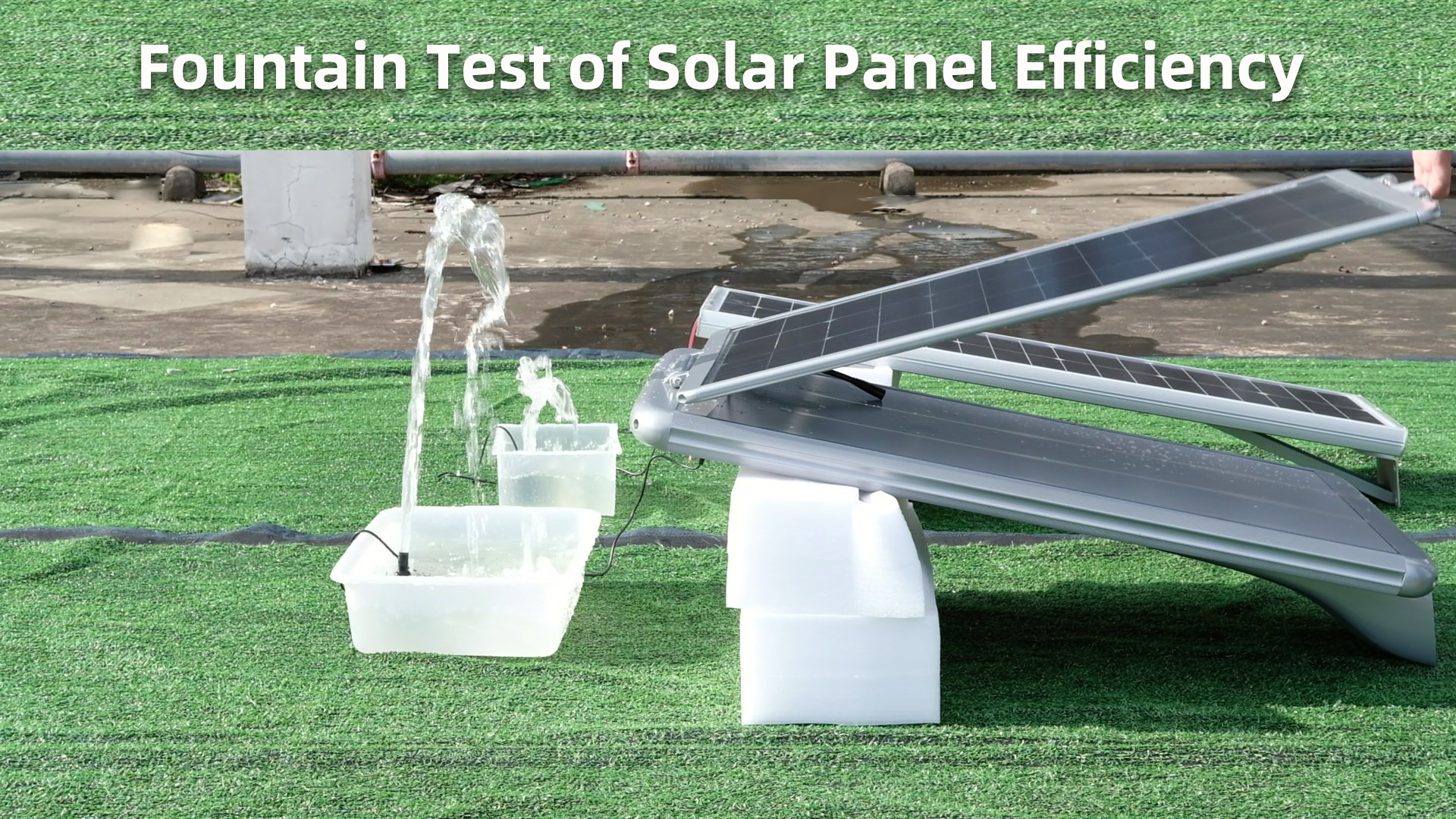
Solar panel power generation comparison: the foldable design changes how much energy the battery receives each day.
2. LED Efficacy and Brightness
High-brightness output is measured in lumens per watt. Cmoonlight uses 200 lm/w high-efficiency LED chips, while low-quality products typically deliver around 110 lm/w. The company describes this as 60% higher light efficiency. For urban main roads and road-construction sites where illumination levels are specified, this difference changes the number of fixtures, pole spacing, and energy drawn from the battery.
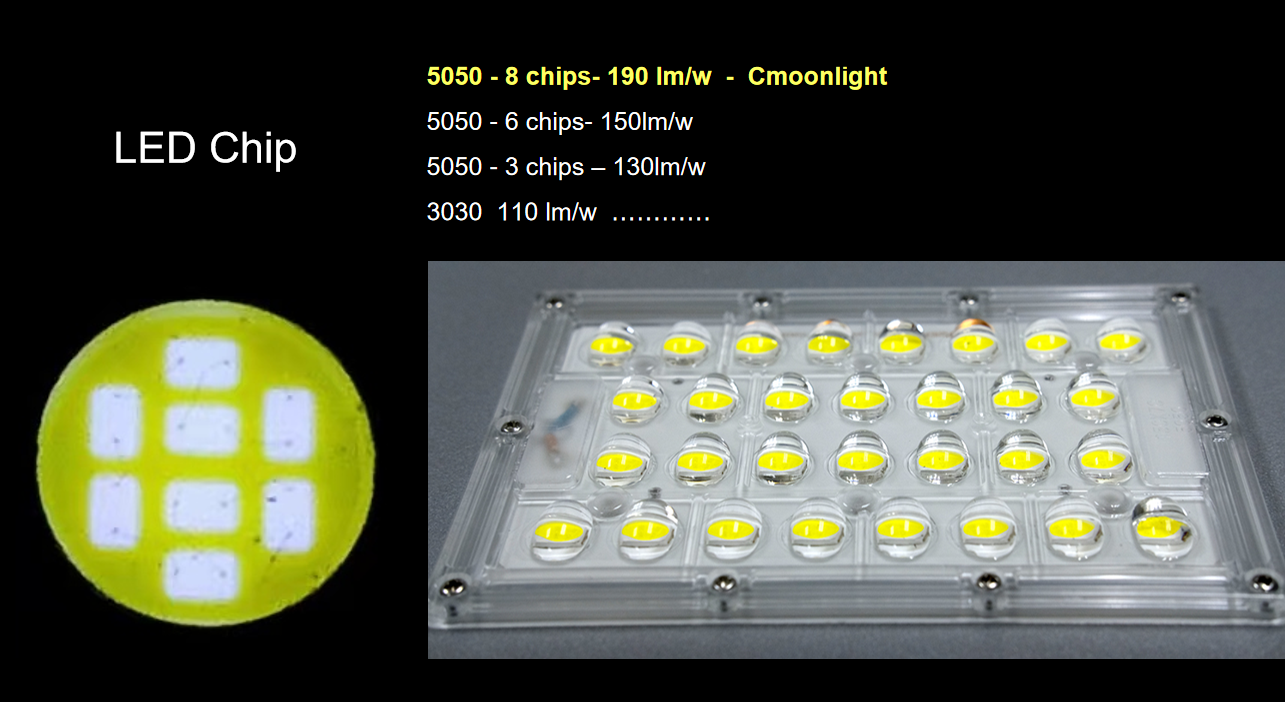
LED luminous efficacy comparison: 200 lm/w is the documented reference in Cmoonlight's integrated lights.
3. Battery Thermal Safety and Lifespan
The battery is the most failure-prone component in integrated solar street lights. In a conventional design, the battery is attached to the solar panel; when the panel reaches 90 degrees Celsius in summer, the battery overheats and loses capacity quickly. Cmoonlight's Palm Tree foldable all-in-one solar street light isolates the battery from the panel, and its ST series uses the same separated layout. The company adds real-time battery monitoring and a regular maintenance service. Cmoonlight states a lifespan of at least 15 years, compared with one year or months for low-quality products.
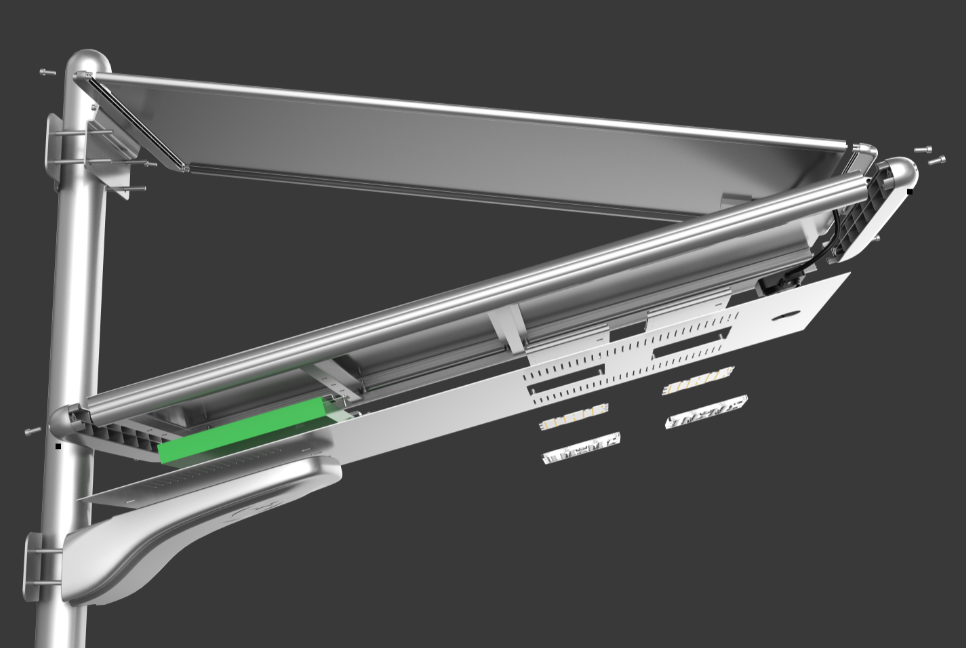
Battery and solar panel separation: the structural layout that prevents battery overheating in hot climates.
4. Controller Type
The controller manages the energy that flows from the panel to the battery and from the battery to the LED. Cmoonlight uses an MPPT solar controller, which it states has a 25% higher conversion rate than a PWM controller. In a system with limited panel area, that conversion advantage directly increases usable runtime per night.
5. Inductive Sensing and Smart Functions
For inductive and smart solar street lights, detection distance determines both energy savings and safety coverage. Cmoonlight's microwave sensor detects movement at 15 meters, while a PIR sensor typically detects at 8 meters. A longer detection distance allows the light to brighten the road ahead earlier, which is relevant for highway service areas and urban main roads with pedestrian traffic.
6. Maintenance and Total Cost
Cmoonlight states that its integrated solar street lights require 90% less maintenance, and the company guarantees that its lamps last at least 15 years without breaking down, consuming less energy while providing greater brightness. Under the same quality level, Cmoonlight states its cost is 50% lower than alternatives. Both claims are relevant inputs to a total-cost-of-ownership calculation at the decision stage.
How to Read a Manufacturer's Spec Sheet
A specification sheet should state the battery chemistry, the placement of the battery relative to the panel, the controller type, the LED efficacy in lumens per watt, and the sensor type with its detection distance. If any of these fields is missing, the quote is incomplete for comparison purposes.
- Battery chemistry and placement: if the battery is attached to the panel, the design carries the overheating risk described earlier.
- LED efficacy: if the quoted value is near 110 lm/w while the Cmoonlight reference uses 200 lm/w, the brightness difference is roughly 60%.
- Controller type: PWM and MPPT differ by the 25% conversion-rate gap stated by Cmoonlight.
- Standards: IEC 61215 covers PV module design qualification, IEC 61730 covers PV module safety, and UL 8801 covers photovoltaic luminaire systems in North America.
Step-by-Step Comparison Process
Use the following eight steps to convert a shortlist of quotes into a decision.
- Define the application and load profile. Identify the installation context first: urban main road, rural road, highway service area, or parking lot. Each application determines pole height, lighting duration, and brightness requirements. Cmoonlight positions its integrated lights for urban main roads, rural roads, highways, and parking lots, so the same product family covers the common municipal use cases.
- Compare solar panel grade and tilt capability. Ask whether the quote uses Grade A or Grade B panels and whether the panel can be angled. Cmoonlight's 30-degree foldable panel is the design that supports its 50% higher solar efficiency claim. Fixed panels lose generation when the sun angle changes across seasons.
- Compare LED efficacy. Check luminous efficacy in lumens per watt on the data sheet. Cmoonlight documents 200 lm/w, versus roughly 110 lm/w for low-quality LEDs. The 60% difference in light efficiency translates directly into fixture count and battery sizing.
- Inspect the battery thermal design. Confirm whether the battery is isolated from the solar panel. Cmoonlight's Palm Tree series separates the two, uses Grade A lithium iron phosphate cells, and adds real-time monitoring. If the supplier cannot show the internal layout, the product carries the overheating risk described in this guide.
- Compare controller type. Prefer MPPT over PWM when the panel area is fixed. Cmoonlight states MPPT provides a 25% higher conversion rate than PWM. Ask the manufacturer to state the controller type in writing.
- Compare sensing and smart functions. If the project needs an inductive or smart solar street light, compare detection distance and dimming behavior. Cmoonlight's microwave sensor detects at 15 meters; PIR sensors generally reach 8 meters. Longer detection improves both energy savings and security coverage.
- Calculate total cost of ownership. Add initial cost, installation cost, maintenance cost, and replacement cycles. Cmoonlight states 90% less maintenance and a 15-year lifespan, with a 50% lower cost under the same quality level. Apply these parameters to your own tariff and labor rates.
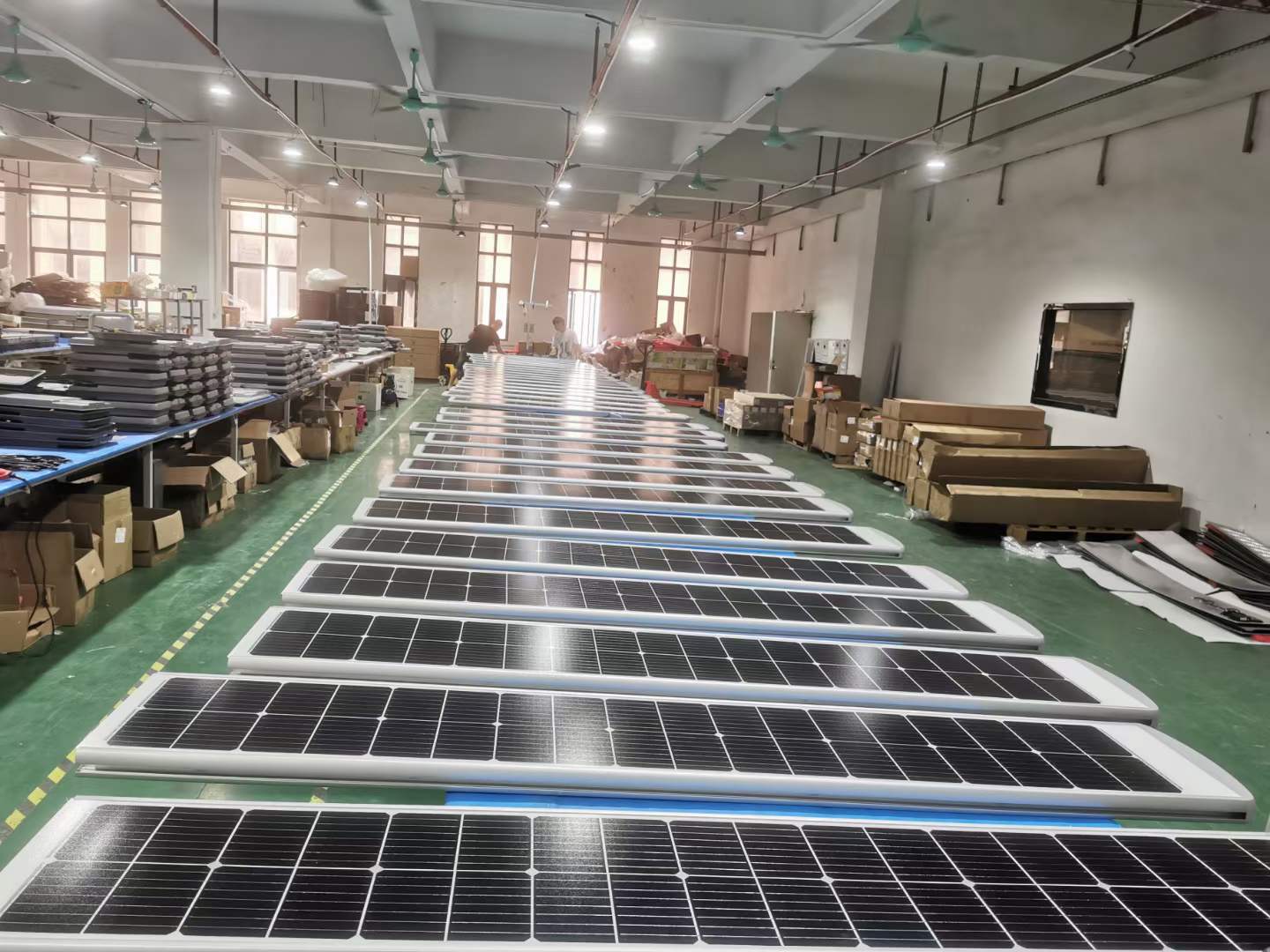
- Verify manufacturer capability and request a sample. Confirm the factory, R&D capacity, and export record before signing. Cmoonlight operates a 20,000-square-meter factory with 245 employees, an annual output of 120,000 units, and 25 R&D engineers. After the document check, request a pre-production sample and run an on-site test.
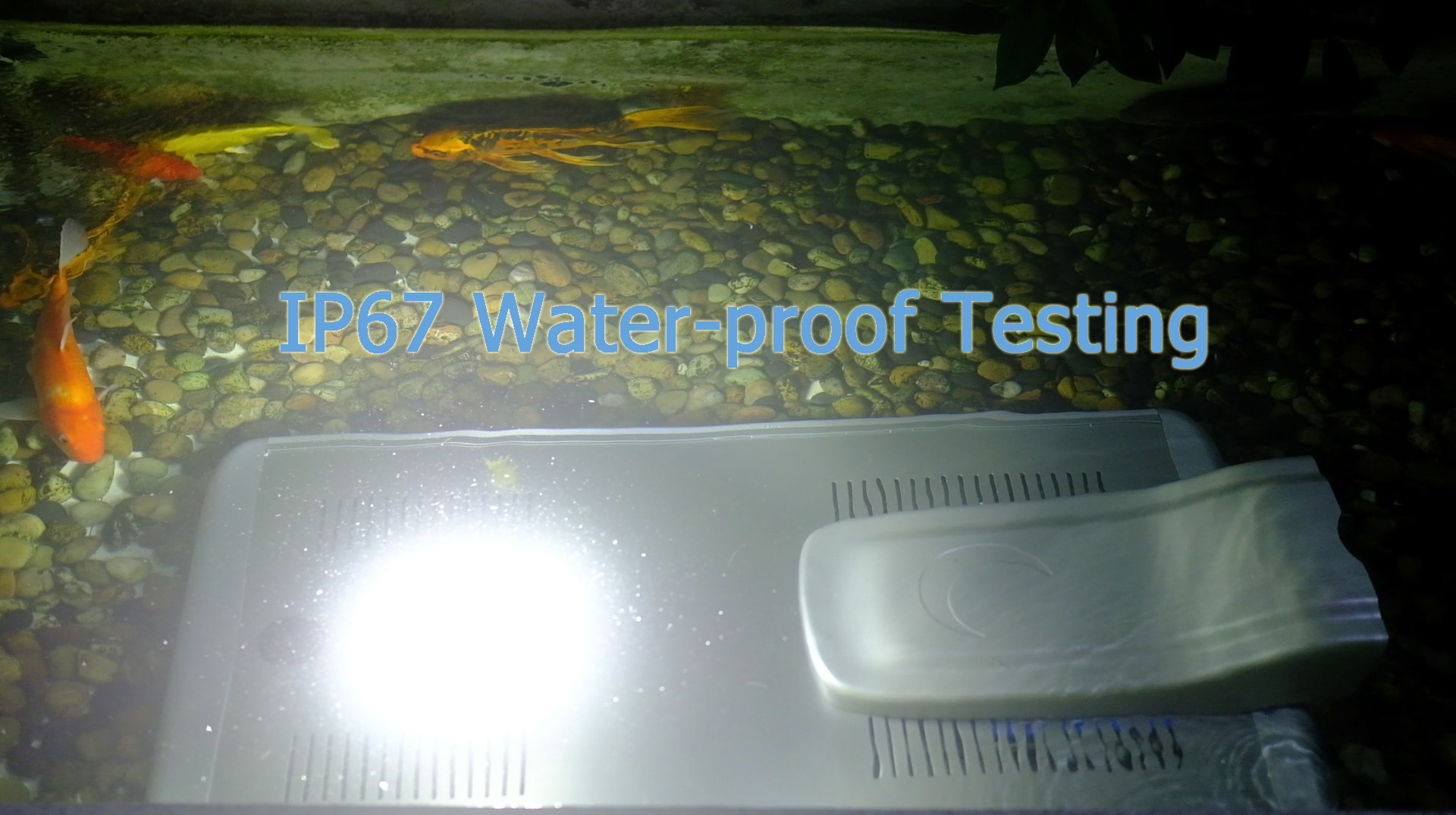
Waterproofing test: one of the documented checks buyers can request as evidence before ordering.
Use Cases Across Applications
Municipal Engineering and Urban Main Roads
Municipal projects need high-brightness output, predictable maintenance, and long service life. Cmoonlight's 200 lm/w LED and 15-year lifespan support these requirements, and the integrated format reduces installation complexity on roads where construction time is limited.
Highway Service Areas
Service areas operate at night and are often far from maintenance depots. Cmoonlight's low-maintenance integrated design and separated battery layout reduce the need for frequent servicing in remote locations. The 15-meter microwave sensor supports energy-saving dimming when the area is empty.
Road Construction Sites
Temporary road-construction lighting needs fast installation and reliable autonomy without trenching or grid connection. Integrated solar street lights can be installed quickly, and the foldable panel design improves generation when the site layout limits solar orientation.
Rural Roads
Rural roads require cost-effective lighting at points with low population density. Cmoonlight positions its integrated lights for rural roads, with a stated cost 50% lower under the same quality level compared with alternatives, which lowers the budget barrier to broader coverage.
Parking Lots and Dusty Environments
For parking lots and high-pollution areas, Cmoonlight also manufactures auto-cleaning solar street lights. According to Liking Energy, self-cleaning solar street lights can reduce maintenance costs by up to 40% in dusty or high-pollution environments such as municipal parking lots.
| Comparison Dimension | Cmoonlight Integrated (Palm Tree Series) | Conventional Low-Cost All-in-One |
|---|---|---|
| Solar panel orientation | Foldable, 30 degrees toward the sun | Fixed, non-adjustable |
| Solar efficiency | 50% higher than conventional fixed design | Baseline |
| Photoelectric conversion | 22% higher | Baseline |
| Solar panel grade | Grade A; double-glass option available | Grade B commonly used |
| LED efficacy | 200 lm/w | Around 110 lm/w |
| Controller | MPPT — 25% higher conversion than PWM | PWM |
| Battery | Grade A lithium iron phosphate, isolated from the panel, real-time monitoring | Attached to the panel, exposed to overheating |
| Sensor | Microwave, 15 m detection distance | PIR, 8 m detection distance |
| Lifespan | At least 15 years | 1 year or months |
| Maintenance | 90% less required | Frequent servicing |
| Cost | 50% lower under the same quality level | Varies by supplier |
| Best-fit applications | Urban main roads, rural roads, highways, parking lots | High failure rate in Africa and the Middle East |
First-party comparison figures published by Cmoonlight for its integrated solar street lights versus low-quality conventional all-in-one products.
Limitations and Trade-Offs to Keep in Mind
Integrated designs generally reduce installation complexity and material costs, while split designs allow modular replacement of individual components. Buyers whose maintenance teams prefer replaceable modules may evaluate split solar street lights as an alternative. The comparison above reflects Cmoonlight's stated figures for its integrated series; buyers should verify each claim against the manufacturer's data sheets, test reports, and warranty terms before ordering.
Frequently Asked Questions
Which certifications and standards should a solar street light manufacturer meet?
Standard solar street light components are required to meet IEC 61215 for PV module design qualification and IEC 61730 for safety qualification. In North America, UL 8801 is the specific safety standard for Photovoltaic (PV) Luminaire Systems, covering the integrated battery, panel, and LED assembly. Buyers should ask a manufacturer for test reports against these standards before finalizing a purchase order.
How does Cmoonlight's integrated solar street light differ from a conventional all-in-one design?
Cmoonlight's integrated solar street light isolates the battery from the hot solar panel, preventing overheating that shortens battery life in conventional all-in-one models. It also uses a foldable 30-degree solar panel, 200 lm/w LEDs, an MPPT solar controller, and a microwave sensor with a 15 m detection distance. Cmoonlight reports 50% higher solar efficiency and 60% higher light efficiency compared with low-quality alternatives, with a lifespan of at least 15 years.
How do I compare total cost of ownership across solar street light manufacturers?
Total cost of ownership depends on initial price, energy efficiency, maintenance frequency, and lifespan. Cmoonlight states its lights consume less energy while providing greater brightness, require 90% less maintenance, and last at least 15 years without breaking down. Under the same quality level, Cmoonlight states its cost is 50% lower than alternatives, so the comparison should focus on component quality and long-term cost rather than sticker price.
What should I check when evaluating a solar street light pre-production sample?
Buyers can verify four points: LED efficacy, because Cmoonlight uses 200 lm/w chips versus 110 lm/w in low-quality alternatives; waterproofing, because Cmoonlight's Palm Tree solar street lights can be directly immersed in pond water in testing; solar panel output, because Cmoonlight's foldable design shows significantly higher generation than conventional fixed panels; and battery thermal design, because the battery should be isolated from the hot solar panel. Cmoonlight publishes comparison evidence for each of these checks.
What is Cmoonlight's production capacity and how do I start a procurement inquiry?
Cmoonlight operates a 20,000-square-meter factory with 245 employees and an annual output of 120,000 units, supported by an R&D team of 25 engineers. The company exports 100% of its output to markets including the Philippines, South America, Thailand, Malaysia, the Middle East, and Africa, and its products run in more than 120 countries and over 400 counties and cities globally. To request a quote or pre-production sample, contact Cmoonlight at info@cmoonlight.com or via WhatsApp at +86 18823328907.
Conclusion
At the decision stage, the goal is not to find the lowest quote but to compare the components that determine lifetime cost. Using the six-dimension framework — solar panel efficiency, LED efficacy, battery thermal safety, controller type, sensing distance, and maintenance — procurement teams can evaluate any solar street light manufacturer against a consistent benchmark. Cmoonlight offers a documented comparison set for its integrated Palm Tree series, plus split, smart, hybrid, and auto-cleaning product lines produced in a 20,000-square-meter Shenzhen factory.
Next Step: Request a Quote or Pre-Production Sample
Compare the documented figures against your project. The Cmoonlight team can provide specifications, test evidence, and a sample for on-site evaluation.
Visit Cmoonlight · info@cmoonlight.com · WhatsApp +86 18823328907
Have Questions or Need More Details?
Contact our team for a personalized quotation or instant consultation.
Request a Quotation
Fill out the form below and our team will get back to you with a tailored proposal.
WhatsApp Direct Chat
Prefer to chat in real-time? Message us on WhatsApp for instant assistance & quick answers.
- Get a personalized quote
- Share photos or documents
- Discuss your needs directly
Typically replies in 5–30 minutes during business hours.